.svg)

.svg)

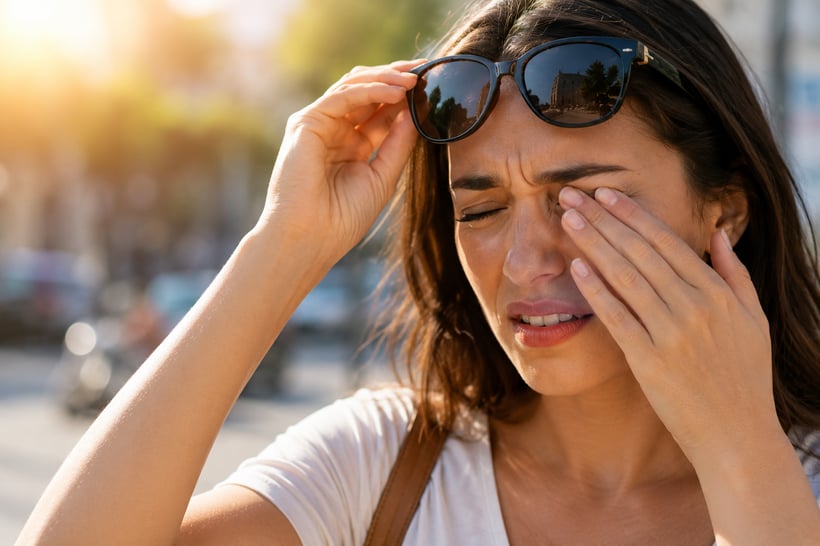
Summer conditions, such as UV exposure, glare, wind, and dry air, can affect eye comfort and vision more than many people realize.
Summer usually means more time outside. More sunlight. More driving. More beach days, patios, sports, and screen time outdoors. But many people don’t realize summer can also put extra stress on their eyes. And sometimes, the symptoms are subtle enough that people ignore them until they become more uncomfortable.
It’s Not Just the Heat
When people think about summer eye irritation, they usually blame the sun.
But several environmental factors can affect how your eyes feel and function during the summer months.
That can include:
- UV exposure
- Wind
- Air conditioning
- Chlorinated pools
- Smoke and pollution
- Bright glare from reflective surfaces
These factors can affect both comfort and visual clarity throughout the day.
Why Your Eyes May Feel More Irritated
Dry eye symptoms often become more noticeable in summer.
That’s because heat, wind, and air conditioning can cause tears to evaporate more quickly.
You may notice:
- Burning or irritation
- Watering eyes
- Tired eyes
- Fluctuating vision
- Discomfort with contact lenses
Ironically, watery eyes can sometimes be a sign of dryness.
When the eyes become irritated, they may produce reflex tears that do not properly stabilize the tear film.
Summer Glare Can Affect More Than Comfort
Bright sunlight is only part of the problem.
Glare happens when light reflects off surfaces like:
- Water
- Roads
- Sand
- Car windows
This scattered light reduces contrast and can make it harder for the eyes to focus comfortably.
For some people, glare may affect:
- Driving
- Sports performance
- Outdoor activities
- General visual comfort
Polarized sunglasses may reduce glare and improve visual clarity in certain environments.
UV Exposure Adds Up Over Time
UV exposure doesn’t only happen at the beach.
It accumulates during everyday activities like:
- Walking outside
- Driving
- Sitting on patios
- Spending time near reflective surfaces
Over time, cumulative UV exposure can contribute to long-term eye health concerns.
That’s why optometrists recommend sunglasses that provide:
- 100% UVA and UVB protection
- UV400 protection
- Proper coverage around the eyes
Larger frames and wraparound styles may also reduce exposure from the sides.
Contact Lenses and Summer Conditions
Summer conditions can sometimes make contact lenses feel less comfortable.
Heat, dry air, and outdoor environments may increase irritation or dryness for some wearers.
Swimming or exposing contact lenses to water can also increase risk of contamination.
That’s why proper contact lens hygiene and regular replacement schedules remain important during the summer months.
The Takeaway
Summer can affect your eyes in more ways than many people realize.
UV exposure, glare, wind, dry air, and environmental conditions can all impact comfort and vision throughout the season.
If your eyes feel different during summer, your optometrist can assess what may be contributing and recommend options suited to your needs.
Find an optometrist near you at findaneyedoctor.ca and book your next eye exam.