.svg)

.svg)

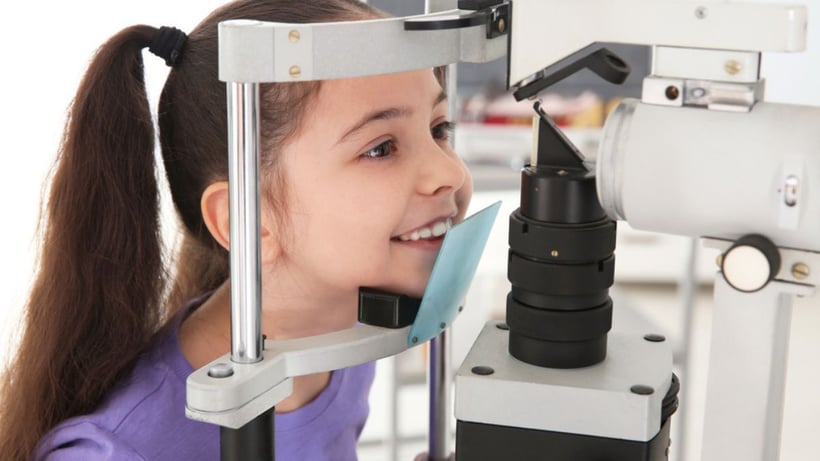
When it comes to your child’s health, early detection is everything—and their eye health is no exception. Vision plays a vital role in learning, development, and confidence. Yet many childhood eye conditions develop quietly, without obvious symptoms. That’s why regular eye exams with an optometrist are so important.
Many eye conditions can be managed, corrected, or slowed in progression, but only if they’re caught early. Here are some of the most common eye conditions in children that often go unnoticed—and why timely detection matters.
Amblyopia (Lazy Eye)
What it is:
A condition where one eye doesn’t see as well as the other, even with glasses or contact lenses. This happens when the brain starts to favour the better seeing eye and ignore the weaker one.
Why early detection matters:
If not treated early, the weaker eye may never develop good vision. Treatments can include glasses, patching the better seeing eye, special eye drops, or vision therapy to help the weaker eye strengthen over time.
Strabismus (Crossed Eyes)
What it is:
When the eyes don’t line up—one eye may turn in, out, up, or down. This misalignment can cause double vision or lead the brain to ignore one eye, sometimes resulting in amblyopia.
Why early detection matters:
Early treatment can prevent amblyopia and help the eyes work together properly—often avoiding surgery later in life. Treatment options include eyeglasses, vision therapy, or surgery depending on the cause.
Refractive Errors (Nearsightedness, Farsightedness, Astigmatism)
What they are:
Conditions that affect how the eyes focus light, leading to blurry vision.
Why early detection matters:
Correcting refractive errors early prevents headaches, eye strain, and learning difficulties. For children with myopia (nearsightedness), early intervention—such as specialized eyeglasses and contact lenses, or low-dose atropine drops—can help slow its progression and reduce long-term risks to eye health.
Convergence Insufficiency
What it is:
The eye muscles have difficulty working together up close, causing double vision or eye strain when reading.
Why early detection matters:
Children with this condition may struggle with reading or be mislabeled as “non-academic.” Treatment through vision therapy, or glasses can dramatically improve focus, comfort, and confidence in learning.
Colour Vision Deficiency
What it is:
A condition where a person has trouble seeing certain colours the same way most people do—often confusing shades of red and green or blue and yellow.
Why early detection matters:
While there’s no cure, early diagnosis helps children adapt at school and in daily life with the right tools and support.
Congenital Cataracts
What they are:
Clouding of the eye’s natural lens present at birth.
Why early detection matters:
Early cataract surgery can preserve sight and prevent amblyopia, ensuring the normal development of vision.
Congenital Glaucoma
What it is:
A rare condition caused by increased eye pressure that can damage the optic nerve and lead to blindness.
Why early detection matters:
Prompt diagnosis and treatment can prevent permanent vision loss and protect lifelong eye health.
Retinoblastoma
What it is:
A rare but serious eye cancer that typically affects young children.
Why early detection matters:
Early diagnosis can be life-saving and may allow for vision-preserving treatment options.
The Bottom Line: Early Detection Changes Everything
Many childhood vision problems are silent—your child may not notice, and you may not see any signs. But untreated vision issues can affect school performance, social development, and lifelong eye health.
That’s why the Ontario Association of Optometrists recommends:
- A first eye exam at 6 months old
- Another at 2–3 years old
- Annual exams after age 4
Best of all, in Ontario, children’s eye exams are covered by OHIP every 12 months until age 20.
Book a Children’s Eye Exam in Ontario Today
An eye exam is quick, non-invasive, and one of the most powerful tools for protecting your child’s vision and future.
Don’t wait for symptoms—by the time they appear, it may already be too late.
👉 Find a local optometrist and book your OHIP-covered children’s eye exam today.