
.svg)

.svg)

What It Is
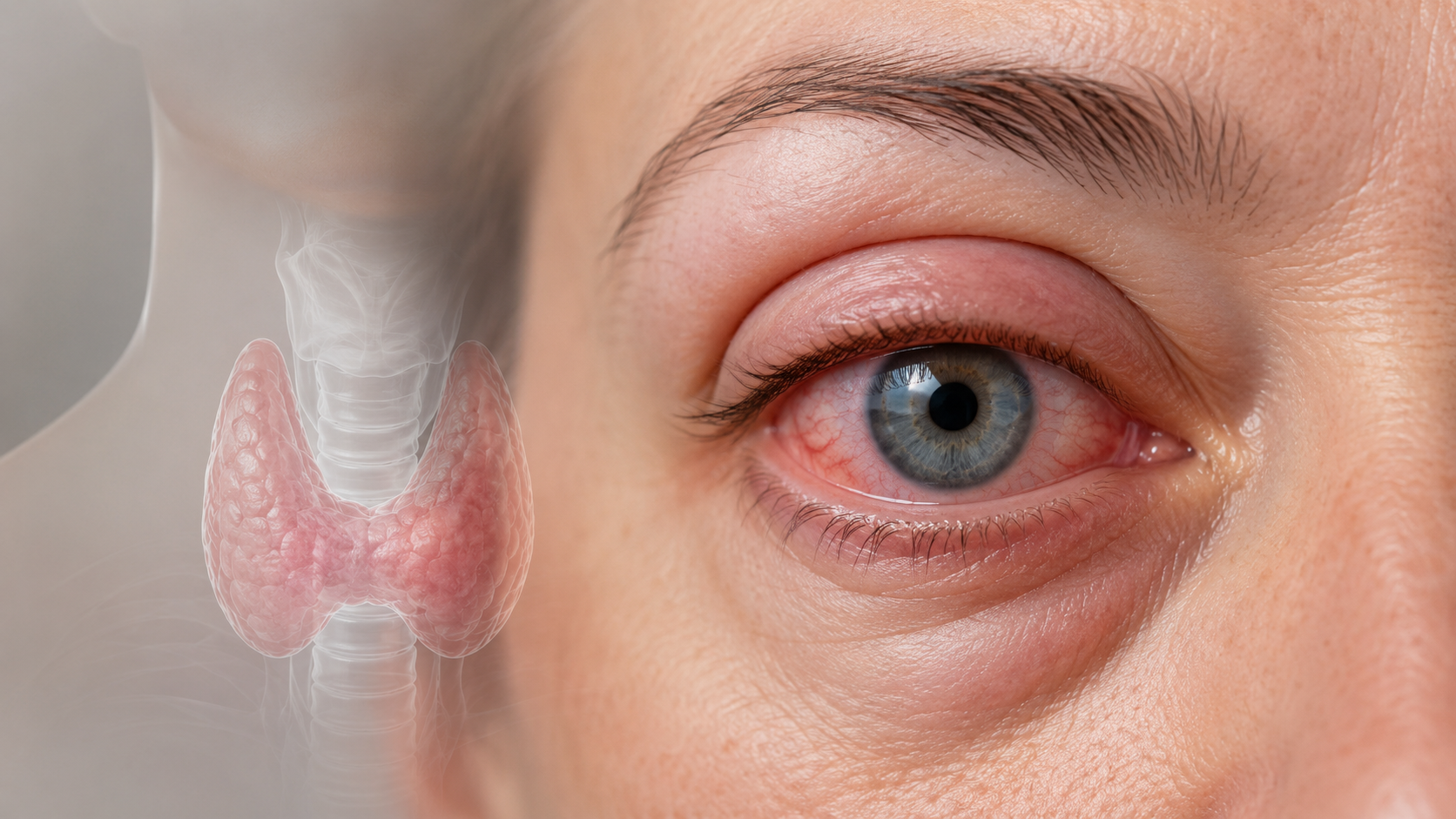
Thyroid Eye Disease (TED) — also known as Graves’ Orbitopathy or Graves’ Ophthalmopathy — is an autoimmune condition that affects the tissues around the eyes.
It occurs when the body’s immune system mistakenly attacks the muscles and connective tissue behind the eyes, often in connection with Graves’ disease, a form of overactive thyroid (hyperthyroidism).
This immune reaction causes inflammation, swelling, and tissue buildup, which can push the eyes forward (a condition known as proptosis or bulging eyes) and affect their movement and appearance.
Thyroid Eye Disease can occur before, during, or after thyroid dysfunction and sometimes even in patients with normal thyroid levels.
Whom It Affects / Causes
Thyroid Eye Disease most commonly affects adults between the ages of 30 and 60, and is more frequent in women than men.
Common risk factors and triggers include:
- Autoimmune thyroid disease (especially Graves’ disease)
- Smoking — significantly increases both risk and severity
- Family history of thyroid or autoimmune disorders
- Radioactive iodine therapy used to treat hyperthyroidism
- High stress levels or recent illness
- Uncontrolled thyroid hormone levels (either high or low)
Although TED is most strongly linked with hyperthyroidism, it can also occur in people with Hashimoto’s thyroiditis or other thyroid conditions.
Symptoms to Watch For
Symptoms of Thyroid Eye Disease can vary from mild irritation to significant vision changes.
Common signs include:
- 👁 Bulging eyes (proptosis)
- 🔥 Eye pain, pressure, or discomfort
- 💧 Dryness, grittiness, or excessive tearing
- 🌫 Double vision (diplopia)
- 💡 Light sensitivity (photophobia)
- 😣 Swelling of eyelids or redness around the eyes
- 😔 Difficulty closing eyes completely
- 🧭 Restricted eye movement or misalignment (strabismus)
- ⚠ Blurred or decreased vision in advanced cases
Because TED can change the appearance of the eyes and eyelids, it may also impact self-esteem and emotional well-being — making early diagnosis and management especially important.
How It’s Diagnosed
Diagnosis begins with a comprehensive eye exam by your optometrist, who may detect early signs of inflammation or changes in eye position before symptoms become severe.
Your optometrist will:
- Review your medical and thyroid history
- Examine the eyelids, eye movements, and ocular surface
- Assess eye pressure and corneal exposure
- Check for double vision or alignment problems
If Thyroid Eye Disease is suspected, your optometrist will coordinate care with your family doctor or endocrinologist for blood tests and imaging (such as CT or MRI) to evaluate orbital tissue and thyroid function.
Treatment & Management
The approach to managing Thyroid Eye Disease depends on the severity and stage of the condition — whether it’s in an active (inflammatory) phase or stable (inactive) phase.
👁️ Early & Mild Cases
Focus on symptom control and protecting the eyes:
- Lubricating eye drops or gels to relieve dryness
- Cool compresses to reduce irritation
- Sleeping with head elevated to reduce swelling
- Wearing sunglasses for light sensitivity
- Avoiding smoking, which worsens inflammation and delays healing
⚕️ Moderate to Severe Cases
Your optometrist may coordinate care with an ophthalmologist and endocrinologist.
Possible medical treatments include:
- Anti-inflammatory medications (steroids or immunosuppressants)
- Teprotumumab (Tepezza) – a targeted therapy for active TED that reduces inflammation and eye bulging
- Prism lenses for double vision
- Radiation therapy to reduce inflammation in orbital tissues (in select cases)
🧑⚕️ Surgical Treatment (for stable phase)
Once the active inflammation has subsided, surgery may be needed to correct:
- Eye protrusion (orbital decompression surgery)
- Double vision (eye muscle surgery)
- Eyelid retraction to improve appearance and comfort
Your optometrist plays an ongoing role in monitoring vision, managing dryness, and coordinating care with specialists throughout your treatment.
Will Thyroid Eye Disease Harm My Eyes?
If untreated, severe cases of Thyroid Eye Disease can cause:
- Corneal damage due to exposure and dryness
- Double vision or eye misalignment
- Optic nerve compression, leading to permanent vision loss
However, with early detection and multidisciplinary care, most patients retain good vision and achieve significant symptom relief.
When to See Your Optometrist
Book an appointment with your optometrist if you:
- Have a history of thyroid disease and notice changes in your eyes
- Experience double vision, swelling, or bulging eyes
- Feel persistent pressure behind your eyes
- Develop new light sensitivity, redness, or dryness
Your optometrist can detect early signs, track progression, and ensure you receive the right care at the right time.
💙 Book an Eye Exam — Ontario optometrists can identify and manage Thyroid Eye Disease early to protect your vision and comfort.