
.svg)

.svg)

What It Is
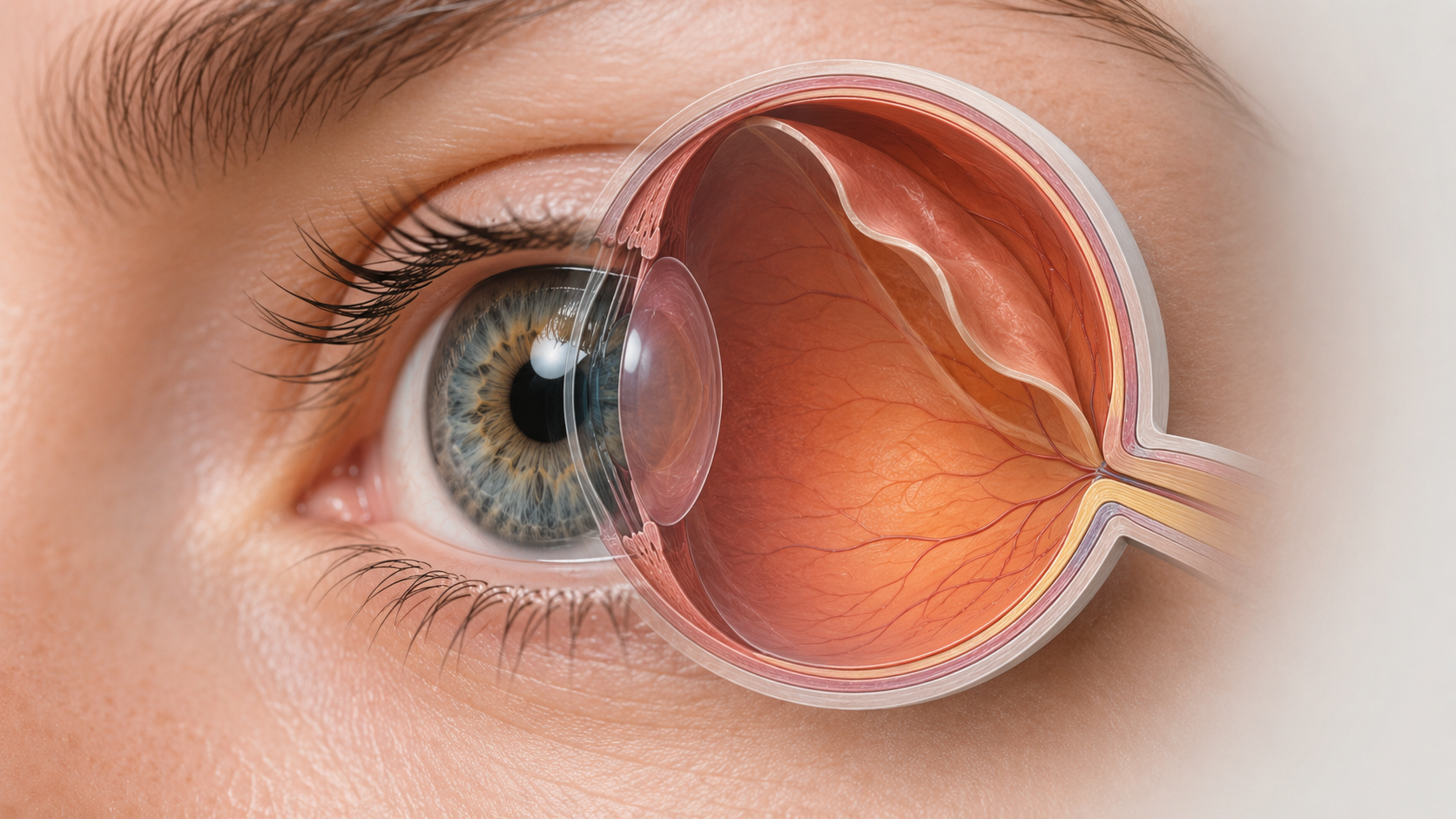
Retinal detachment is a serious eye condition that occurs when the retina — the thin, light-sensitive layer at the back of the eye — separates from the underlying tissue that nourishes it.
The retina contains photoreceptor cells (rods and cones) that convert light into electrical signals, which travel to the brain and allow us to see.
When the retina detaches, these light signals are disrupted, resulting in partial or complete vision loss.
If not treated immediately, retinal detachment can cause permanent blindness in the affected eye.
Whom It Affects / Causes
Retinal detachment can affect anyone, but certain risk factors increase the likelihood.
Common causes and risk factors include:
- Eye injury or trauma (even from years earlier)
- High myopia (nearsightedness) — the longer eye shape stretches and thins the retina
- Aging changes in the vitreous (gel inside the eye) that pull on the retina
- Retinal tears or holes that allow fluid to collect beneath the retina
- Eye diseases such as diabetic retinopathy
- Previous eye surgery, especially cataract surgery
- Family history of retinal detachment
While some detachments follow injury or disease, many happen spontaneously with no warning. Regular eye exams are key to detecting early retinal changes before vision is affected.
Symptoms to Watch For
A retinal detachment is a medical emergency — if you experience these symptoms, contact your optometrist or go to an emergency room immediately.
Common warning signs include:
- ⚡ Flashes of light (especially in side vision)
- ⚫ New or increased floaters (spots or cobwebs drifting in your vision)
- 🕶️ A shadow, curtain, or veil moving across your visual field
- 👁️ Sudden decrease in vision or blurriness
- 💨 Distortion or waviness in what you see
Not everyone experiences all symptoms, and in some cases, a detachment can occur without pain or obvious warning signs.
How It’s Diagnosed
Your optometrist can detect early signs of retinal tears, holes, or detachment during a comprehensive eye examination — often before symptoms appear.
Diagnosis may involve:
- Pupil dilation for a clear view of the retina
- Slit-lamp and binocular indirect ophthalmoscope (BIO) exam to examine retinal layers
- Optical Coherence Tomography (OCT) or fundus photography for detailed imaging
- Referral to an ophthalmologist if surgery is needed
Routine eye exams are crucial, especially if you are nearsighted, have had prior eye surgery, or notice any changes in your vision.
Treatment & Management
Retinal detachment requires urgent medical treatment to preserve sight.
If your optometrist suspects or confirms a detachment, you will be referred immediately to an ophthalmologist for surgical repair.
Treatment options include:
- Laser photocoagulation – seals retinal tears to prevent detachment
- Cryotherapy (freezing treatment) – repairs small holes or weak areas
- Scleral buckle surgery – a silicone band is placed around the eye to support the retina along with a gas bubble or silicone oil injected into the eye
- Pneumatic retinopexy – a gas bubble is injected into the eye to press the retina back in place
- Vitrectomy – removes the vitreous gel pulling on the retina
The success of treatment depends on how quickly the detachment is addressed. The sooner surgery occurs, the better the chance of saving vision.
Can Retinal Detachment Be Prevented?
While not all cases can be prevented, early detection and monitoring of at-risk eyes are critical.
Your optometrist can identify and treat:
- Retinal thinning or tears before detachment occurs
- High-risk eyes (e.g., highly myopic or post-surgery)
- Symptoms of posterior vitreous detachment (PVD) that can precede detachment
Protecting your eyes from injury (e.g., wearing sports or workplace eye protection) and maintaining regular eye exams are the best prevention steps.
When to See Your Optometrist
Book an immediate exam if you notice:
- Flashes of light or new floaters
- A sudden shadow or dark area in your vision
- Vision distortion or loss in one eye
Don’t wait — early treatment can save your sight.
💙 Book an Eye Exam — Retinal detachment can happen without warning, but early detection by your optometrist can protect your vision.