
.svg)

.svg)

What It Is
Low vision means a level of vision loss that makes daily activities difficult — even with the best possible glasses, contact lenses, or medical treatment.
A person with low vision may struggle to:
- Read or write
- Recognize faces
- Shop or cook independently
- Watch television
- Drive safely
While low vision cannot always be restored, optometrists can help maximize remaining vision and improve independence through rehabilitation and assistive devices.
Whom It Affects / Causes
Low vision can result from many eye conditions or injuries that damage the retina, optic nerve, or visual pathways.
Common causes include:
- Age-Related Macular Degeneration (AMD) — damage to the macula causes central vision loss
- Glaucoma — affects peripheral (side) vision
- Cataracts — cause clouding and glare
- Diabetic Retinopathy — damages retinal blood vessels
- Optic nerve damage or stroke — causes partial or full visual field loss
- Congenital eye conditions or trauma
Although aging is a major factor, low vision can affect people of any age.
Symptoms to Watch For
- Difficulty reading or seeing details, even with glasses
- Trouble recognizing faces or navigating familiar places
- Increased sensitivity to glare
- Needing brighter light for close-up tasks
- Blurred, patchy, or missing areas in vision
If these symptoms interfere with your daily life, it’s time to see your optometrist.
How It’s Diagnosed
A comprehensive eye exam is essential to determine the cause of vision loss.
Your optometrist will:
- Examine your eyes for underlying disease
- Assess visual acuity and visual fields
- Discuss how your vision affects daily tasks
- Recommend a referral to a low vision agency or an optometrist specializing in low vision if necessary
Even when medical or surgical treatment cannot restore vision, low vision rehabilitation can significantly improve your ability to live independently.
Treatment & Management Options
Low vision care focuses on enhancing remaining sight and adapting the environment.
Your optometrist may recommend:
🔍 Optical Devices
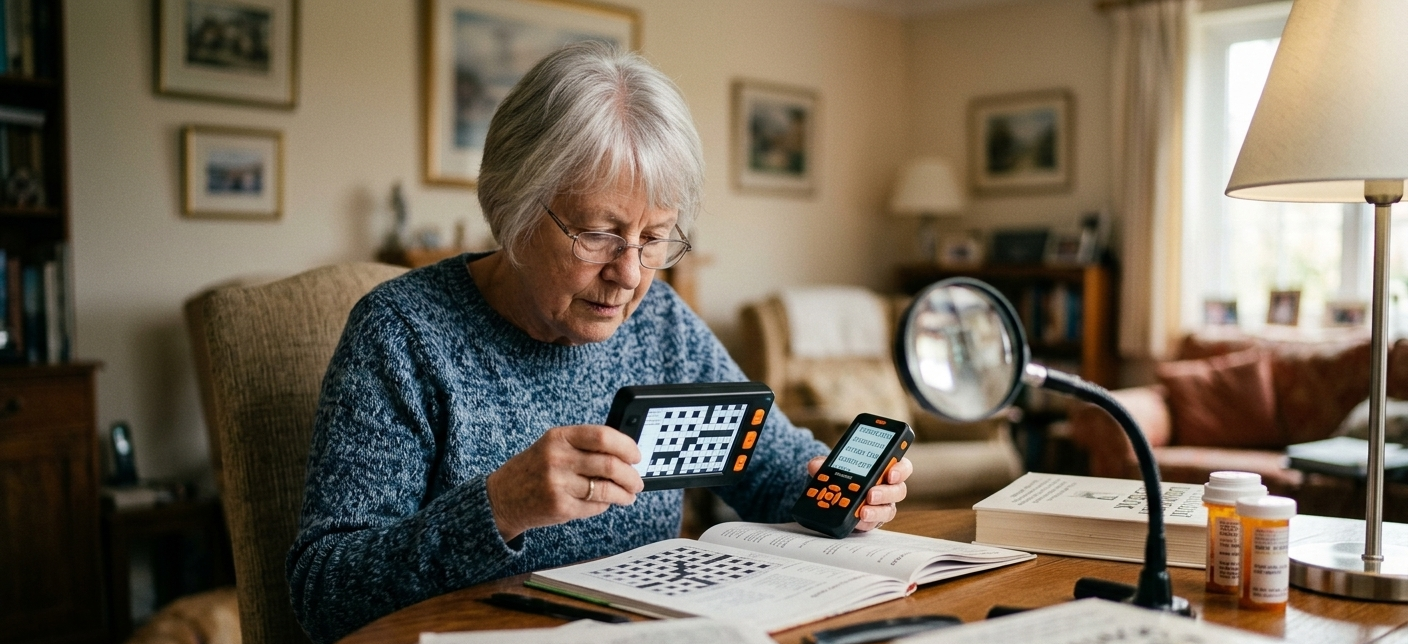
- Magnifying lenses for reading or sewing
- High-powered reading glasses
- Telescopic lenses for distance tasks
💡 Environmental Adaptations
- Bright, well-positioned lighting to improve contrast
- Tinted lenses to reduce glare
- Large-print books, high-contrast household tools, and accessible devices
💻 Electronic Aids
- Closed-circuit television (CCTV) magnifiers
- Screen readers and magnification software for computers, tablets, and phones
- Smart devices with built-in accessibility settings
🤝 Low Vision Rehabilitation
A personalized program may include:
- Training to use magnifiers and assistive technology
- Orientation and mobility strategies
- Environmental modifications at home
- Emotional and psychological support to adjust to vision changes
Low vision rehabilitation has been proven to improve quality of life, increase independence, and even reduce depression associated with vision loss.
When to See Your Optometrist
If you’ve been told “nothing more can be done” for your eye disease, low vision rehabilitation can still help.
Book an appointment if you:
- Struggle with everyday tasks
- Notice worsening central or side vision
- Have been diagnosed with AMD, glaucoma, or diabetic eye disease
Your optometrist can connect you with low vision specialists and community resources for ongoing support.
💙 Book an Eye Exam — Even if vision loss can’t be reversed, optometrists can help you make the most of your sight and maintain your independence.