
.svg)

.svg)

Glaucoma: The Silent Thief of Vision
What It Is
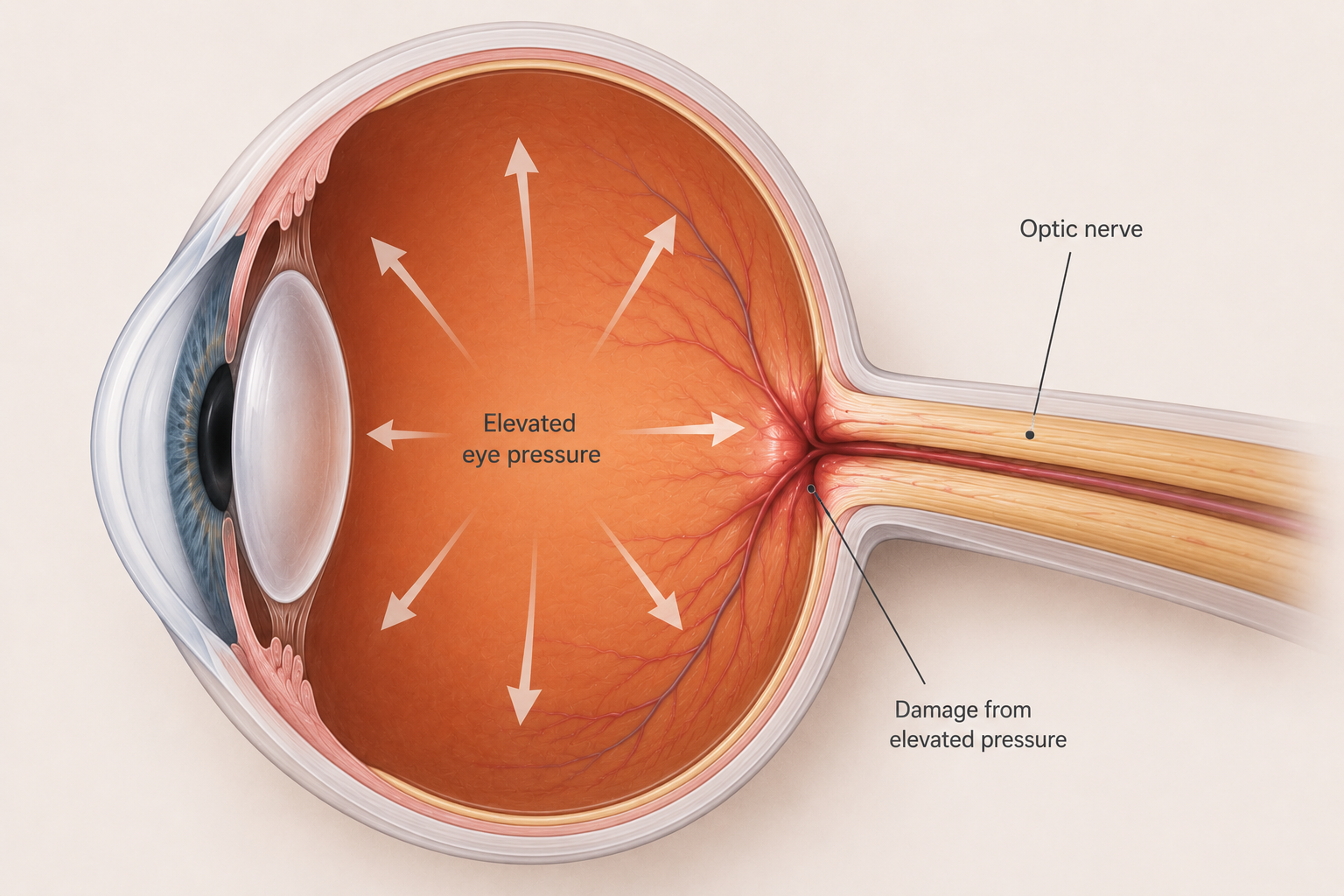
Glaucoma is a chronic, progressive disease that damages the optic nerve, the pathway that carries visual information from your eye to your brain. Damage is often linked to elevated intraocular pressure (IOP), but glaucoma can also occur at normal pressure levels.
Once the optic nerve is damaged, the vision loss is permanent. Because the condition usually develops slowly and without pain, people often don’t know they have it until significant loss has already occurred, which is why it’s often called “the silent thief of sight.”
Who It Affects / Risk Factors
Glaucoma can affect anyone, but risk is higher for those who:
- Are over age 40 (risk rises steadily with age)
- Have a family history of glaucoma
- Have diabetes or high/low blood pressure
- Have had eye injuries or past eye surgeries
- Use steroid medications long-term (drops, inhalers, oral)
- Are very nearsighted or farsighted
- Are of African, Hispanic, or Asian ancestry
Because early disease has no symptoms, routine eye exams are the only reliable way to detect it early.
Symptoms
Early glaucoma has virtually no symptoms. As the disease progresses, people may notice:
- Gradual loss of peripheral (side) vision
- Blurred or hazy vision
- Halos or glare around lights
- Eye redness, pain, or pressure (angle-closure glaucoma)
- Headache, nausea, or vomiting (angle-closure glaucoma)
- Rapid changes in vision (angle-closure glaucoma)
Acute angle-closure glaucoma is a medical emergency that can cause vision loss within hours. Sudden pain, redness, or nausea should be assessed immediately.
How It’s Diagnosed
Optometrists use several painless tests to identify glaucoma early:
- Tonometry: Measures eye pressure
- Ophthalmoscopy: Examines the optic nerve for damage
- Visual field testing: Maps peripheral vision
- OCT imaging: Detects structural changes in the optic nerve and retina
- Gonioscopy: Examines the drainage angle to determine glaucoma type
These tools allow detection long before symptoms appear, when treatment is most effective.
Types of Glaucoma
Primary Open-Angle Glaucoma
The most common type is approximately 90% of cases. There is a mismatch between fluid production and drainage in the eye. Pressure builds slowly, and the optic nerve is gradually damaged. There are usually no early warning signs.
Angle-Closure Glaucoma
Less common but far more serious. The drainage angle becomes blocked, causing a sudden spike in pressure. Symptoms include eye pain, headache, blurry vision, nausea, and halos. This is an emergency.
Secondary Glaucoma
Develops as a result of eye injury, surgery, inflammation, certain medications, or other health conditions that elevate eye pressure.
Normal-Tension Glaucoma
Optic nerve damage occurs despite pressure readings in the normal range. Reduced blood flow to the optic nerve is believed to play a role.
Treatment and Management
Glaucoma cannot be cured, but it can often be slowed or controlled with early detection and proper management.
Medicated Eye Drops
The most common treatment. Drops reduce pressure by lowering fluid production and/or improving drainage. Consistent daily use is critical.
Laser Therapy
- Selective Laser Trabeculoplasty (SLT): Improves drainage in open-angle glaucoma
- Laser Peripheral Iridotomy (LPI): Creates a tiny opening in the iris to improve fluid flow in narrow or closed-angle glaucoma
Surgery
Used when drops and laser treatments are not enough:
- Trabeculectomy
- Drainage implants
- Minimally invasive glaucoma surgery (MIGS)
Optometrists monitor ongoing changes and co-manage treatment with ophthalmologists.
Lifestyle and Prevention
While glaucoma itself can’t always be prevented, overall eye health can be supported by:
- Regular comprehensive eye exams (every 1–2 years after 40)
- Avoiding smoking and limiting excessive caffeine
- Regular physical activity
- Managing diabetes, blood pressure, and cardiovascular health
How Optometrists Support Glaucoma Care
Your optometrist is often the first to detect glaucoma. Through regular exams and OCT imaging, they:
- Identify early structural or pressure changes
- Monitor progression with visual field tests and OCT
- Coordinate care for laser or surgical treatments
- Support long-term disease management and medication use
Optometrists play a central role in reducing avoidable vision loss. Continuity of care with your regular optometrist is important for tracking changes to the optic nerve over time.
When to See Your Optometrist
Seek immediate care if you experience:
- Sudden eye pain or redness
- Blurred vision or halos
- Nausea or vomiting associated with eye discomfort
Even without symptoms, all adults over 40 should schedule routine comprehensive eye exams.