
.svg)

.svg)

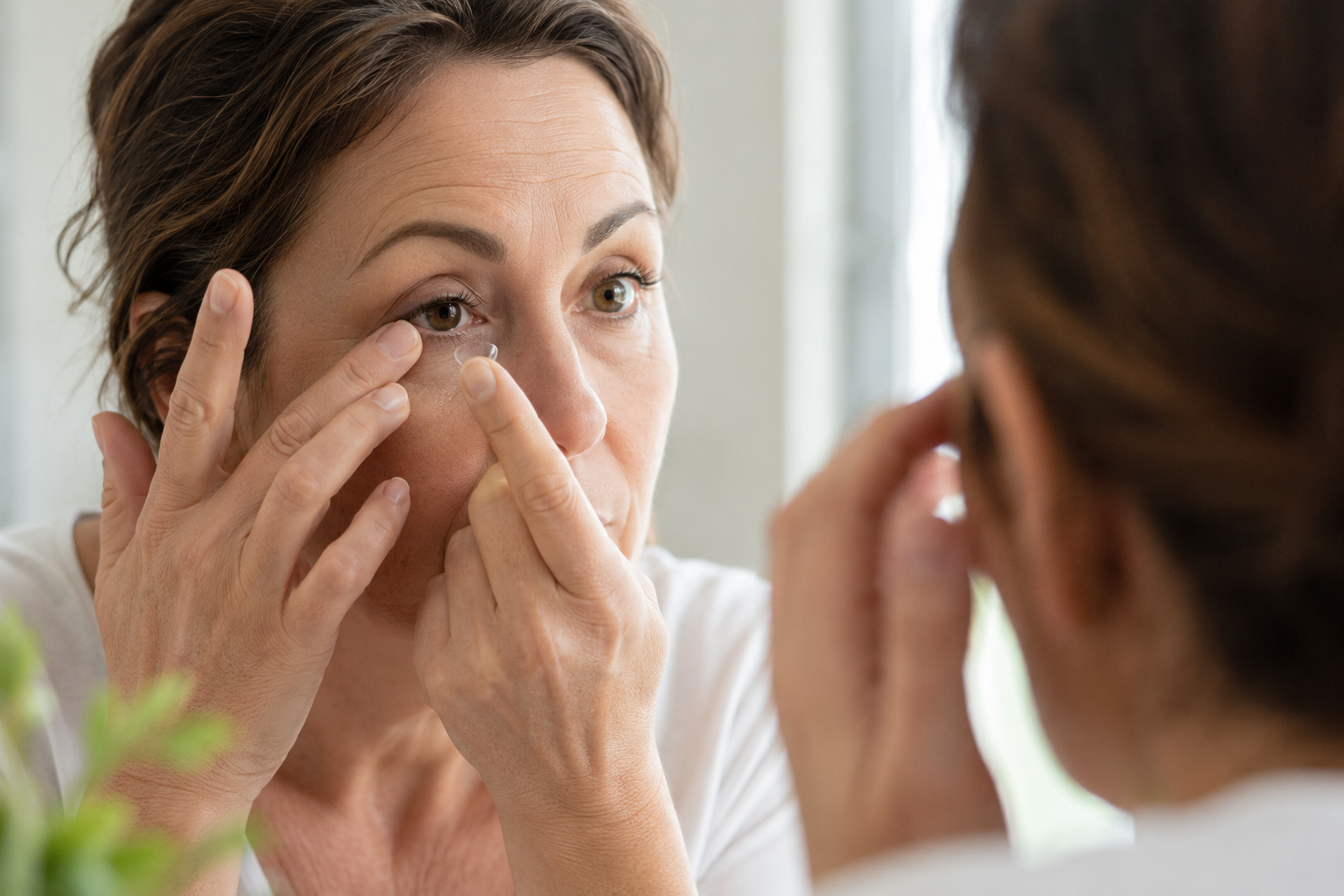
What They Are
Contact lenses are thin, curved lenses that sit directly on the surface of the eye to correct vision.
They work just like glasses by bending light so it focuses properly on the retina, giving you clear, sharp vision — but with the added benefit of freedom from frames.
Today’s contact lenses come in a wide range of materials, replacement schedules, and specialized designs to suit different eyes and lifestyles.
Your optometrist plays a key role in helping you find the safest and most comfortable option.
Who They’re For
Contact lenses can correct most common vision conditions, including:
- Myopia (nearsightedness)
- Hyperopia (farsightedness)
- Astigmatism
- Presbyopia (age-related near-vision loss)
- Irregular corneas
They’re a great choice for people who:
- Prefer an alternative to glasses
- Lead active or athletic lifestyles
- Want full peripheral vision
- Need specialty correction for complex eye conditions
However, contact lenses are medical devices, not cosmetics — they must be properly fitted and cared for under the supervision of an optometrist to prevent irritation or infection.
Types of Contact Lenses
There’s no “one-size-fits-all” solution. The right contact lens depends on your vision needs, comfort level, and lifestyle.
Here’s how the main types compare:
👓 Soft Contact Lenses
Soft lenses are made of flexible, water-absorbing materials that let oxygen pass through to the cornea.
They are the most common type prescribed today and are known for comfort and easy adaptation.
Pros:
- Comfortable from the start
- Stay in place during activity
- Available in many styles and prescriptions
Cons:
- Shorter lifespan
- Can dry out more easily
- Limited parameters
🔵 Rigid Gas Permeable (RGP) Lenses
Rigid (or “hard”) contact lenses are made of durable materials that retain their shape on the eye, allowing for crisp, clear vision — especially for people with high astigmatism or irregular corneas.
Pros:
- Excellent vision quality and oxygen flow
- Long-lasting and cost-effective over time
- Easier to handle and clean
Cons:
- Longer adaptation period
- Can feel less comfortable at first
- More prone to dust or debris irritation
RGP lenses are ideal for those seeking precision vision and willing to commit to consistent wear for comfort adaptation.
🌞 Daily vs. Monthly Contact Lenses
Both daily and monthly disposable lenses offer clear vision — but differ in convenience, cost, and care routine.
|
Feature |
Daily Disposable Lenses |
Monthly Lenses |
|
Replacement |
New pair every day |
Replace every 30 days |
|
Maintenance |
No cleaning needed |
Must clean and store nightly |
|
Comfort |
Ultra-thin, fresh each day |
Slightly thicker, durable |
|
Convenience |
Great for part-time or busy wearers |
Better for daily, full-time users |
|
Cost |
Higher long-term cost |
Lower cost per lens |
|
Hygiene |
Lowest risk of infection |
Requires discipline for cleaning |
💡 Tip: If you’re prone to dryness or allergies, daily disposables can be more comfortable and hygienic. If you wear lenses most days, monthly CL may be more cost-effective.
🌊 Scleral Lenses
Scleral contact lenses are larger, custom-fitted lenses that vault over the cornea and rest on the white part of the eye (the sclera).
They create a smooth optical surface and a fluid layer between the lens and the eye — providing both vision correction and moisture.
Best for:
- Irregular corneas (such as keratoconus)
- Severe dry eye or ocular surface disease
- Post-surgery eyes (LASIK or corneal transplant)
- High prescriptions or complex vision needs
Benefits:
- Exceptional stability and comfort
- Moisture reservoir helps relieve dryness
- Customized fit provides crisp vision
Scleral lenses require specialized fitting by an optometrist trained in advanced contact lens care.
How They’re Fitted
Your optometrist performs a comprehensive contact lens exam to:
- Measure your corneal shape and curvature
- Assess your tear film and eye health
- Evaluate lifestyle factors and visual demands
- Fit trial lenses and assess comfort and clarity
Proper fit is essential — poorly fitted lenses can cause dryness, irritation, infection, or corneal damage.
Caring for Your Lenses
Proper hygiene and care are key to safe lens wear:
✅ Always wash and dry your hands before handling lenses
✅ Follow your optometrist’s wearing schedule
✅ Use only recommended cleaning solutions — never tap water
✅ Replace lenses as directed
✅ Give your eyes a break — avoid sleeping in lenses unless prescribed
✅ Have regular eye exams to reassess fit and eye health
When to See Your Optometrist
Book an appointment if you notice:
- Eye redness, irritation, or pain
- Blurred vision or halos
- Excess tearing or dryness
- Sensitivity to light
- Discomfort after lens insertion
Early attention prevents complications and ensures your eyes remain healthy and comfortable.
💙 Book a Contact Lens Fitting — Your optometrist can help you find the perfect lenses for comfort, vision, and lifestyle.