
.svg)

.svg)

What It Is
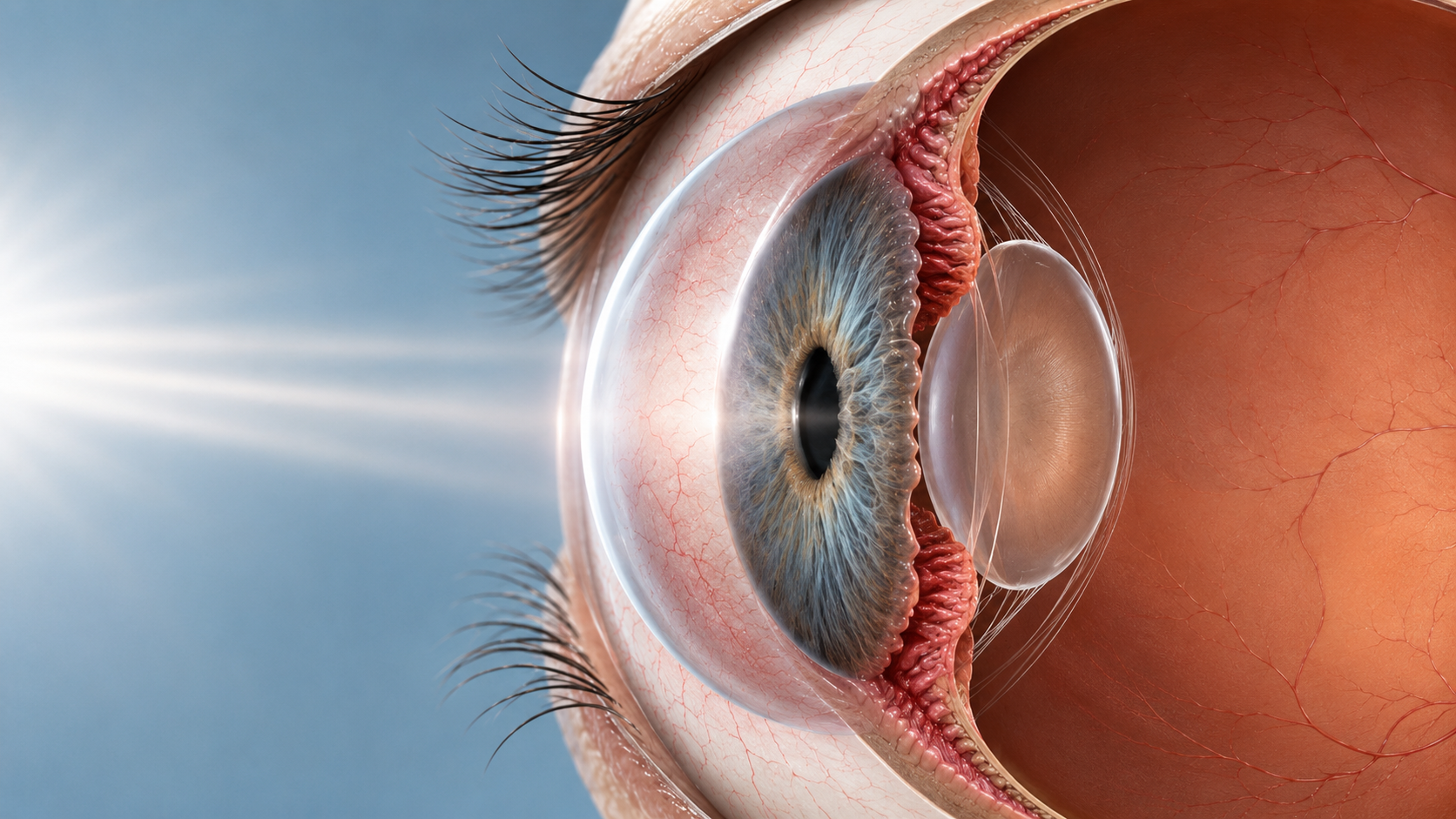
Anterior uveitis is an inflammation of the iris (the coloured part of the eye) and sometimes the ciliary body, a structure just behind the iris that helps focus the lens.
The condition causes eye pain, redness, light sensitivity, and blurred vision.
While it can be uncomfortable, anterior uveitis is not contagious and is not caused by infection in most cases.
Because inflammation occurs inside the eye, the condition requires prompt diagnosis and treatment to prevent complications or vision loss.
Whom It Affects / Causes
In many cases, no specific cause can be identified. However, anterior uveitis can sometimes be associated with systemic inflammatory or autoimmune conditions, including:
- Rheumatoid arthritis or juvenile arthritis
- Ankylosing spondylitis
- Lupus
- Gout
- Psoriasis
- Crohn’s disease or ulcerative colitis
- Syphilis or herpes infection
In these cases, your optometrist may recommend blood tests or imaging to identify any underlying systemic link.
Other potential triggers include:
- Eye trauma or injury
- Post-surgical inflammation
- Certain medications
- Immune system dysfunction
Symptoms to Watch For
Anterior uveitis usually affects one eye, though both can be involved.
Common symptoms include:
- Eye redness, especially around the iris 🔴
- Throbbing eye pain or deep ache behind the eye 😣
- Sensitivity to light (photophobia) 🌤️
- Blurred or reduced vision 👁️🗨️
- Small or irregular pupil
- Excessive tearing
Because symptoms can appear suddenly and worsen quickly, early evaluation is crucial.
How It’s Diagnosed
Optometrists diagnose anterior uveitis through a comprehensive eye exam that includes:
- Slit-lamp examination – to identify inflammatory cells inside the front chamber of the eye
- Tonometry – to check intraocular pressure (which can rise or fall during uveitis)
- Pupil testing – to assess for irregular shape or sluggish response
- Review of systemic symptoms – to identify potential underlying conditions
If systemic disease is suspected, your optometrist may coordinate with your family doctor or ophthalmologist for blood tests, X-rays, or specialist referral.
Treatment & Management
Prompt treatment helps relieve pain, reduce inflammation, and prevent vision loss.
Typical therapy includes:
💧 Prescription Eye Drops
- Steroid drops to reduce inflammation
- Cycloplegic drops to relax the iris and ciliary body, relieving pain from muscle spasm and preventing the pupil from sticking to the lens (a complication called posterior synechiae)
Drops are typically used for several weeks and must be tapered gradually as directed by your optometrist to avoid flare-ups or side effects.
🩺 Follow-Up Care
- Frequent follow-ups are needed to monitor healing and intraocular pressure
- If inflammation recurs, additional treatment or investigation may be required
- In recurrent or systemic cases, oral medication or immunosuppressive therapy may be used under specialist care
Complications & Risk Factors
If left untreated, anterior uveitis can lead to:
- Permanent structural damage to the iris or lens
- Glaucoma (increased eye pressure)
- Cataracts
- Vision loss
Because uveitis can recur, patients may require ongoing monitoring to manage inflammation early and protect long-term vision.
When to See Your Optometrist
Book an appointment immediately if you experience:
- Sudden redness and light sensitivity
- Eye pain or pressure
- Blurred vision that worsens over hours or days
- A history of autoimmune or inflammatory disease
Your optometrist can diagnose anterior uveitis, begin treatment right away, and coordinate any medical investigations if needed.
💙 Book an Eye Exam — Early treatment of anterior uveitis by your optometrist can relieve pain, reduce inflammation, and protect your sight from long-term damage.