.svg)

.svg)


Most people think about eye safety only when something goes wrong.
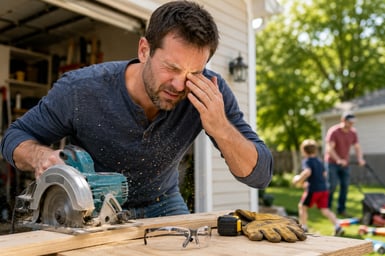
A splash. A flying object. A sudden injury.
But many workplace eye injuries are preventable. And many of them happen during routine tasks people do every day.
Eye safety at work is not just about hard hats and warning signs. It is about awareness, habits, and professional eye care.
Where eye injuries really happen
Eye injuries are not limited to construction sites or factories. They happen in offices, workshops, kitchens, labs, and warehouses.
Common risks include
- Flying debris from tools or machinery
- Chemical splashes and fumes
- Dust and fine particles
- Prolonged screen use and eye strain
- Poor lighting and glare
- Vision changes that affect job performance
- Eye conditions that increase sensitivity to light or strain
- The need for task-specific eyewear or screen lenses
- Early signs of eye disease
Even jobs that seem low risk can put stress on the eyes over time.
Why everyday protection matters
Many eye injuries occur because protective eyewear was not used, did not fit properly, or was not appropriate for the task.
Optometrists often see patients after an injury has already occurred. But they also play a key role in prevention. From recommending proper protective eyewear to identifying visual demands specific to a job, optometrists help reduce risk before problems start.
Other issues develop gradually.
Dry eyes. Headaches. Blurred vision. Fatigue.
These may feel minor at first, but they can affect focus, accuracy, and safety on the job.
Clear vision supports productivity and confidence. When vision is strained or compromised, mistakes become more likely.
The role of optometrists in workplace eye safety
Workplace eye safety is not only about protective equipment. It also includes regular eye exams with an optometrist.
Optometrists assess more than visual acuity. They evaluate eye health, visual comfort, and how vision is used throughout the workday.
An eye exam can identify
Many people adapt to gradual vision changes without realizing it. Optometrists are trained to detect these changes early and recommend solutions that support comfort and safety at work.
Small changes make a difference
Improving workplace eye safety does not always require major changes.
Optometrists often recommend simple adjustments
-
Wearing appropriate protective eyewear
-
Improving lighting and reducing glare
-
Managing screen time and visual breaks
-
Adjusting workstations to reduce eye strain
These recommendations are tailored to the individual and the demands of their job.
The takeaway
Eye safety is part of overall workplace safety. It protects not only vision, but confidence, productivity, and long-term eye health.
Optometrists play an essential role in both prevention and early detection. Regular eye exams help ensure vision stays clear, comfortable, and suited to the work being done.
Book an eye exam at findaneyedoctor.ca to support clear, comfortable vision at work.