


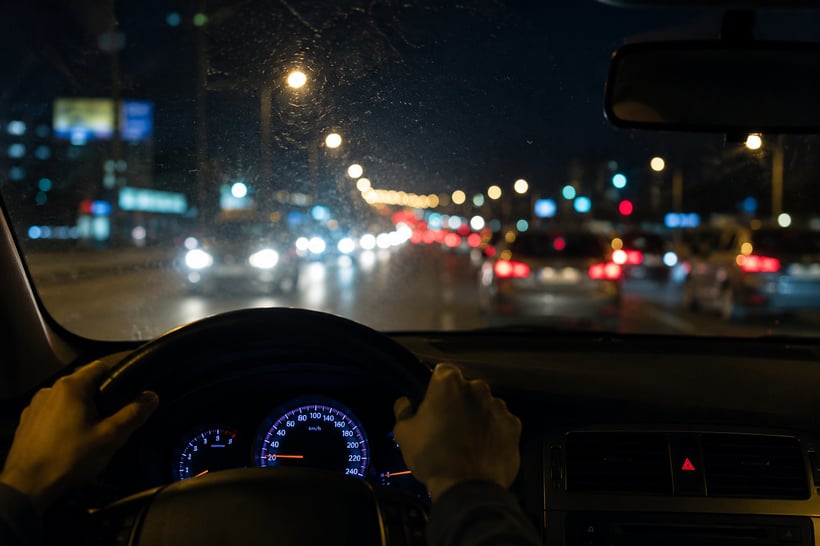
Maybe you first noticed it on a familiar drive home. Headlights seemed brighter, road signs were harder to make out, and your eyes took longer to adjust after an oncoming car passed.
Nothing was exactly blurry. Driving at night just felt harder than it used to. If that sounds familiar, your eyes may be telling you something.
It’s Not Always the Headlights
Seeing in darkness asks more of your vision. With less light and lower contrast, changes that are easy to overlook during the day can become much more noticeable at night.
Glare, halos, difficulty reading signs, or slower adjustment after bright headlights can be related to several factors, including prescription changes, cataracts, or dry eye.
Your Eyes Don’t Stay the Same Forever
We tend to think of eyesight as something relatively fixed.
You get a prescription. You update it occasionally. Life goes on.
But your eyes continue changing throughout adulthood.
The natural lens inside the eye changes with age. Cataracts can gradually develop. Your prescription can shift. Dry eye can affect the quality of the optical surface of the eye.
Some of these changes happen so slowly that your brain adapts along with them.
Then you get behind the wheel on a dark road, and suddenly the difference becomes much harder to ignore.
That Halo Around a Headlight Can Be a Clue
One of the most common changes people notice is increased glare or halos around lights.
There are several possible reasons.
With cataracts, for example, the natural lens in your eye becomes increasingly cloudy. Light entering the eye can scatter, making headlights appear more intense or surrounded by halos.
Astigmatism and other prescription changes can also distort points of light.
Even dry eye can play a role. Your tear film is part of the eye’s focusing surface, so when it becomes unstable, the clarity of lights can fluctuate.
The experience may be similar. The reason behind it may be completely different.
That’s why the symptom itself doesn’t tell the whole story.
“I Can Still See Fine During the Day”
You might. That’s what makes night vision changes easy to dismiss.
You can read your phone. You can work at your computer.
You can see road signs during the day. Then the sun goes down and everything feels different.
Vision isn’t tested only by whether you can make out letters on a bright chart. Real life asks your eyes to function across changing distances, lighting conditions and levels of contrast.
Night driving is one of those situations where subtle changes can become much more obvious.
Don’t Wait Until You Stop Driving at Night
If you’ve noticed yourself becoming less comfortable behind the wheel after dark, mention it at your next eye exam.
Tell your optometrist what has changed. Maybe it’s glare, halos, darker roads, or headlights that suddenly seem brighter than they used to.
Your optometrist can assess your prescription and eye health, look for changes such as cataracts, and determine what may be contributing to the difference you’re noticing.
The Drive Home Can Tell You Something
Sometimes vision changes announce themselves with obvious blur. Sometimes they’re quieter.
They show up as an extra squint at an approaching car. A road sign that takes longer to read. A drive you’d rather make before sunset.
If night driving doesn’t feel like it used to, your eyes may be telling you something.
Find an optometrist near you at findaneyedoctor.ca and book your next eye exam.