.svg)

.svg)

What It Is
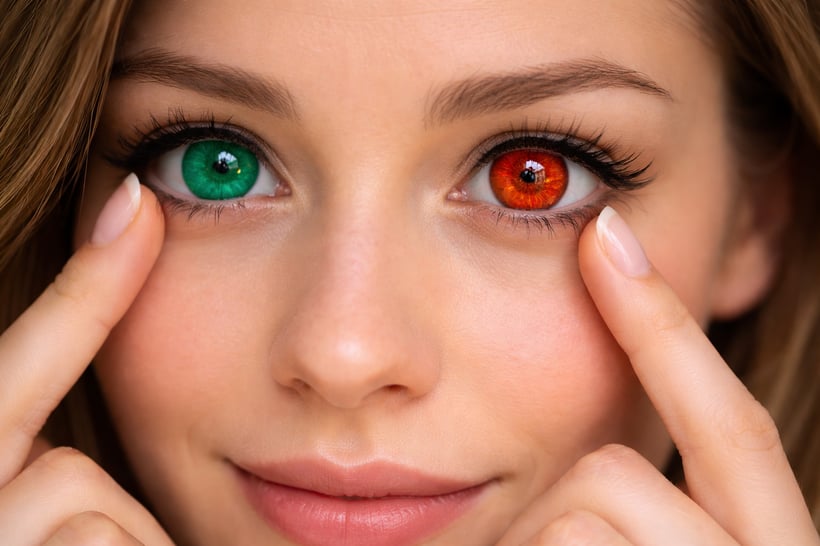
Cosmetic contact lenses — sometimes called decorative or theatrical lenses — change how your eyes look. They can be used to enhance natural eye colour, create fantasy looks for events like Halloween, or achieve dramatic effects for photography or performance.
But even if you don’t need vision correction, these lenses are still medical devices — and wearing them without proper fitting or care can cause serious eye infections or permanent vision loss.
Who It Affects / When to Use with Caution
- Anyone using costume or coloured contacts for Halloween or special events
- People purchasing lenses without a prescription or optometrist fitting
- Individuals who share lenses or buy them online or from novelty stores
- Those with dry eyes, allergies, or a history of eye irritation
Types of Cosmetic Contact Lenses
Opaque Tints
Lenses with a solid pattern that completely covers the iris (the coloured part of the eye), used to change eye colour — light or dark.
Special Effect or Theatrical Lenses
Cover the iris with a pattern or design — like cat eyes, vampire eyes, or alien eyes — often used for Halloween or film.
Circle Contact Lenses (Big-Eye Lenses)
Feature a larger iris design to create a “doll-eye” effect. These are especially popular in beauty and cosplay culture.
While these lenses may look harmless, improper fit, poor materials, or unsupervised use can cause serious complications.
Symptoms to Watch For
If you experience any of the following after wearing cosmetic lenses, remove them immediately and contact an optometrist:
- Redness or irritation
- Eye pain or burning sensation
- Blurred or decreased vision
- Watery eyes or discharge
- Light sensitivity or swelling
These could be early signs of infection, corneal damage, or ulcer formation.
How It’s Diagnosed
If irritation or vision loss occurs, your optometrist will examine your eyes for:
- Corneal abrasions (scratches on the surface)
- Ulcers or infections caused by bacteria or fungi
- Allergic or toxic reactions to lens materials or cleaning solutions
- Signs of conjunctivitis (pink eye) or inflammation
Prompt treatment can often prevent long-term damage — but delays can lead to permanent scarring or vision loss.
Treatment & Management
Your optometrist will create a personalized plan based on your eye health and how you use contact lenses.
This may include:
- Prescription decorative lenses properly fitted to your eye shape
- A safe cleaning and disinfection system
- Advice on wear time and replacement schedule
- Lubricating drops to reduce dryness or discomfort
Infections are treated with antibiotic or anti-inflammatory drops, and contact lens use is paused until the eye heals completely.
Tips for Safe Cosmetic Contact Lens Use
Before Wearing
- Visit an optometrist for a fitting — even if the lenses don’t correct vision.
- Never buy lenses without a prescription. Avoid novelty stores, salons, or online sellers not verified as medical suppliers.
While Wearing
- Wash and dry your hands before touching lenses.
- Follow your optometrist’s recommended wear time — never longer.
- Avoid sleeping or swimming with lenses in your eyes.
- Never share lenses with others.
After Wearing
- Use only the cleaning and disinfecting solutions your optometrist recommends.
- Replace lenses and cases as instructed — do not reuse or “top off” old solution.
- Schedule regular eye exams to monitor eye health.
When to See Your Optometrist
If you notice pain, redness, light sensitivity, or vision changes — even after a short period of lens wear — remove the lenses and contact your optometrist right away.
Your optometrist can identify infection and/or inflammation early and prevent permanent damage.
💙 Book an Eye Exam — Whether for vision correction or cosmetic use, your optometrist will ensure your contact lenses are safe, comfortable, and properly fitted.