
.svg)

.svg)

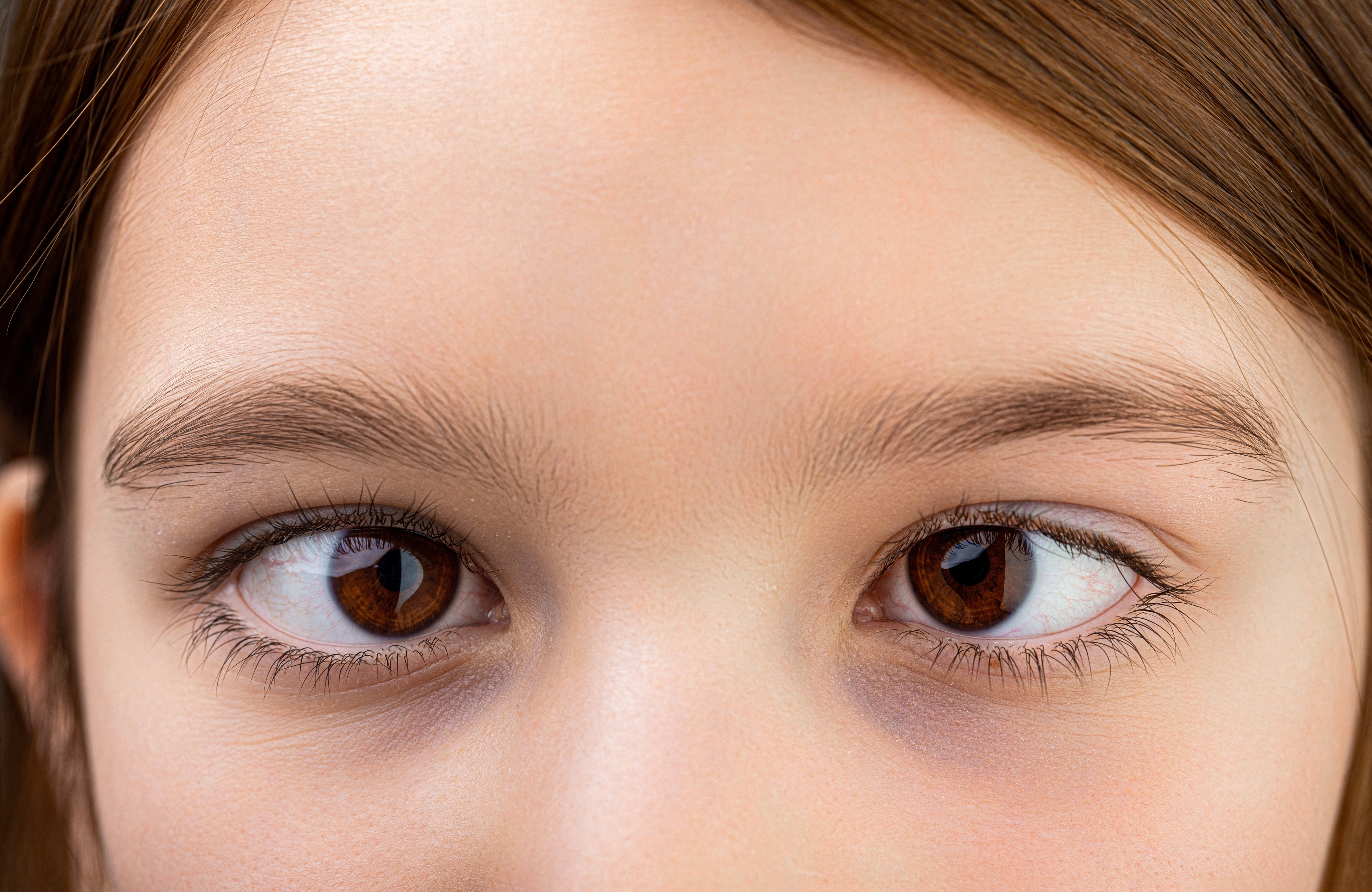
Strabismus — Understanding Eye Misalignment
What It Is
Strabismus, often called crossed eyes or an eye turn, is a condition where the eyes do not align properly. Instead of pointing in the same direction, one or both eyes may turn inward (esotropia), outward (exotropia), upward (hypertropia), or downward (hypotropia).
Because the eyes aren’t working together, the brain receives two different images. To avoid double vision, it may suppress the image from the misaligned eye. If this continues untreated, it can lead to amblyopia (lazy eye).
Strabismus is not something a child grows out of — without treatment, it typically worsens.
Causes
Eye coordination develops between birth and early childhood (roughly six months to four years). When this system doesn’t develop properly, strabismus can occur.
Common causes and risk factors include:
- Family history of strabismus
- Significant refractive error, especially farsightedness
- Poor eye muscle coordination or abnormal nerve signals
- Eye injury or trauma
- Systemic or neurological conditions (stroke, tumour, diabetes, thyroid eye disease)
- Sudden onset in adults due to vascular or neurological events
Strabismus most often begins in infancy or early childhood, but adult-onset cases do occur.
Symptoms
Strabismus can be constant or intermittent. Symptoms may include:
- One eye turning in, out, up, or down
- Double vision or blurry vision
- Headaches or eye strain
- Closing or squinting one eye to see clearly
- Reduced depth perception
- A wandering eye, especially when the child is tired
Parents are often the first to spot an eye turn, especially in photos.
How It’s Diagnosed
A comprehensive eye examination by an optometrist is the most reliable way to diagnose strabismus and determine its underlying cause. Early detection — ideally by six months of age — allows for the best treatment outcomes.
Assessment may include:
- Eye alignment tests (cover test, corneal light reflex)
- Ocular motility testing
- Depth perception and binocular vision testing
- Refraction to detect refractive errors
- Evaluation for possible neurological or systemic causes
Treatment
Treatment depends on the type of strabismus, its severity, and the patient’s age. The goal is to realign the eyes, improve binocular vision, and prevent amblyopia. With early intervention, strabismus can often be corrected successfully, restoring proper eye alignment and visual development.
Options include:
- Eyeglasses or prisms to correct refractive errors and assist alignment
- Vision therapy to strengthen eye coordination and control
- Eye drops or patching to treat amblyopia
- Surgery in cases where the eye muscles need adjustment
When to See an Optometrist
Book an eye exam if you or your child experience:
- Eyes that appear crossed or misaligned
- Double vision or difficulty judging depth
- Head tilting to see clearly
- Trouble focusing or keeping both eyes open
Optometrists can diagnose the type of strabismus, begin appropriate treatment, and refer to ophthalmology when surgery is required.