
.svg)

.svg)

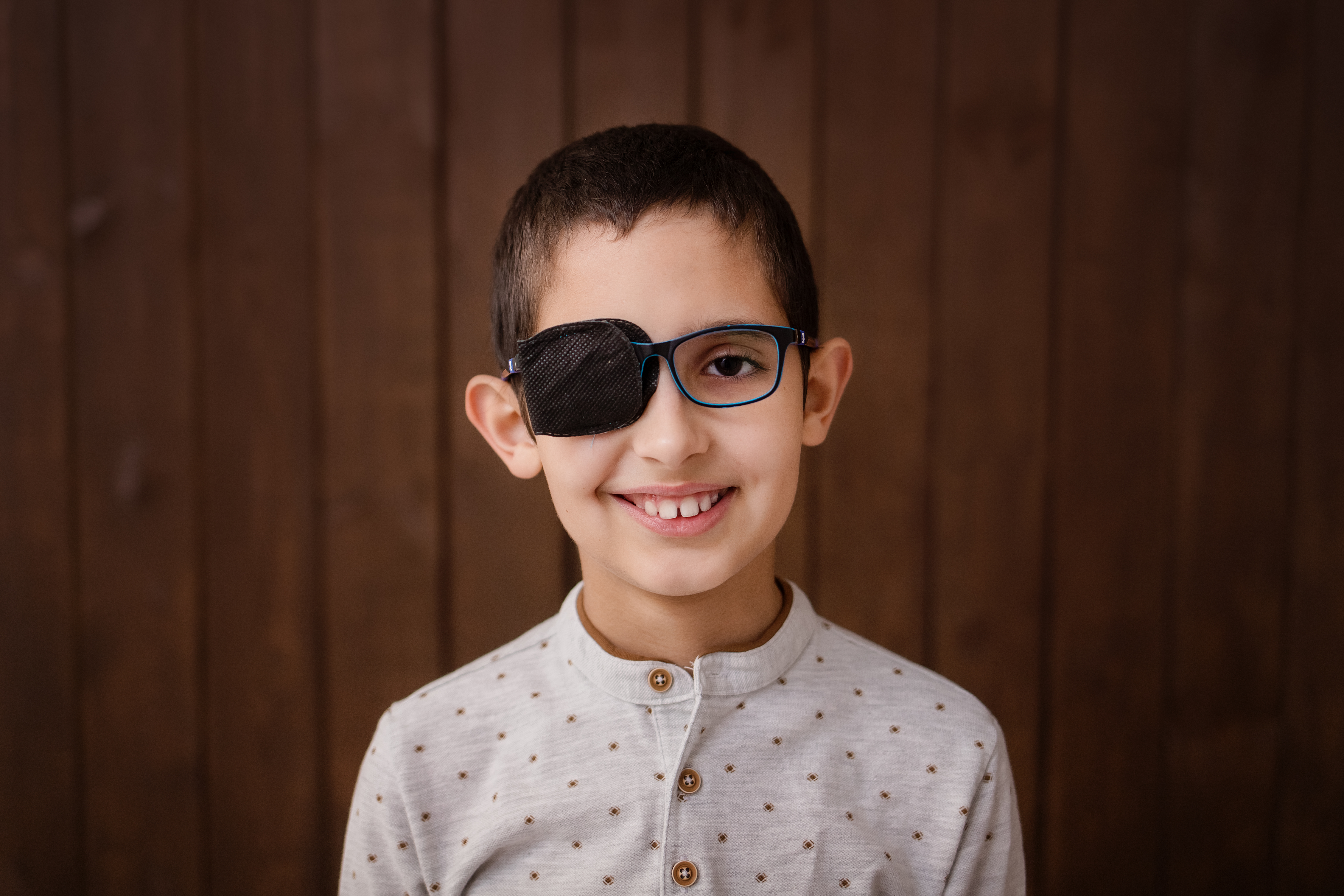
What It Is
Amblyopia, often called lazy eye, is reduced vision in one or both eyes caused by abnormal visual development in early childhood. The eye may appear normal, but the connection between that eye and the brain never forms properly. Without intervention, the brain increasingly relies on the stronger eye and suppresses the weaker one, which can lead to permanent vision loss.
Amblyopia is one of the most common childhood vision problems, affecting roughly 2–4% of children under six. When it’s caught early, most children can regain normal or near-normal vision.
Causes
Amblyopia develops when the brain receives unequal or poor visual input from one eye during the critical early years. Common causes include:
Refractive Amblyopia
Large differences in prescription between the two eyes (e.g., one eye is far more farsighted or astigmatic).
The brain prioritizes the clearer eye and ignores the blurrier one.
Strabismic Amblyopia
Caused by eye misalignment (strabismus).
To avoid double vision, the brain shuts down input from the turned eye.
Deprivation Amblyopia
Occurs when light cannot reach the retina clearly due to:
• Congenital cataracts
• Drooping eyelid (ptosis)
• Corneal injury or disease
This is the most urgent form because the brain receives little to no usable visual information.
Family history of high prescriptions, strabismus, or childhood eye disease increases risk, but amblyopia is not always hereditary.
Symptoms
Amblyopia can be silent. Many children show no obvious symptoms because the stronger eye compensates. Most children won’t report vision problems — they assume what they see is normal. That’s why routine exams are essential.Possible signs include:
- Poor depth perception or apparent clumsiness
- Squinting or closing one eye
- Persistent head tilt or head-turning
- Difficulty with reading or near tasks
- Eye misalignment (strabismus)
- Weak performance in sports requiring hand-eye coordination
How It’s Diagnosed
Amblyopia cannot be reliably detected through school or pediatric screening alone. A comprehensive eye exam by an optometrist is required. Assessment may include:
- Vision testing in each eye
- Refraction to measure prescription differences
- Eye alignment and movement tests
- Binocular vision testing to determine how the eyes work together
- 6–9 months of age
- Age 3
- Every year from 6–19
These timelines align with Eye See…Eye Learn®, which provides OHIP-insured exams and free glasses for eligible Junior and Senior Kindergarten students with particiapting optometrists.
Treatment & Management
Treatment focuses on restoring vision in the weaker eye by improving clarity and retraining the brain to use it.
Corrective Lenses: Glasses or contact lenses correct prescription differences and give both eyes a fair starting point.
Patching (Occlusion Therapy): Covering the stronger eye for part of the day forces the brain to use the amblyopic eye. Duration depends on age and severity.
Atropine Eye Drops: Blur vision in the stronger eye to encourage use of the weaker one. Often used as an alternative to patching.
Vision Therapy: Structured activities and eye-brain exercises to improve coordination, focusing, and binocular control.
Treating the Underlying Cause
- Surgery for congenital cataracts
- Glasses, therapy, or surgery for strabismus
- Medical treatment for corneal disease or other causes of visual deprivation
Treatment is most effective before age seven, but improvements are still possible in older children — and even adults — with structured, consistent therapy.
Will the Amblyopic Eye Go Blind?
Not typically. The amblyopic eye sees an image, but it’s unclear because the neural pathway did not fully develop. Peripheral vision remains normal.
However, untreated amblyopia can result in permanent, irreversible central vision loss, and if the stronger eye is injured later in life, the impact is far more severe.
When to See an Optometrist
Book an eye exam if your child:- Has an eye that turns in or out
- Tilts or turns their head when looking at objects
- Fails a vision screening
- Has a family history of amblyopia, strabismus, or high prescriptions
Early detection is the difference between correctable and permanent vision loss.