
.svg)

.svg)

What is diabetes
Diabetes is a serious and sometimes life-threatening disease caused by the body’s inability to produce or effectively use insulin — the hormone that regulates blood sugar (glucose).
Without enough insulin, glucose builds up in the bloodstream, leading to high blood sugar levels that can damage the eyes, heart, kidneys, nerves, and blood vessels over time.
In Ontario, over 1.5 million people live with diabetes, and many don’t realize that vision loss can be one of its most serious complications.
Symptoms of Diabetes
Common signs and symptoms include:
- Blurred vision
- Unusual thirst
- Frequent urination
- Weight changes (gain or loss)
- Extreme fatigue or lack of energy
- Frequent or recurring infections
- Cuts or bruises that heal slowly
- Tingling or numbness in hands or feet
Because diabetes can develop slowly, many people are diagnosed for the first time during a routine eye exam — long before other symptoms appear.
How Diabetes Affects the Eyes
Diabetes can affect nearly every part of the eye and is a leading cause of vision impairment and blindness in adults.
High blood sugar levels can damage small blood vessels in the retina, alter fluid balance in the lens, and affect nerve signals that control the eyes.
That’s why OHIP covers annual eye exams for all Ontarians living with diabetes, regardless of age.
Common Diabetes-Related Eye Conditions
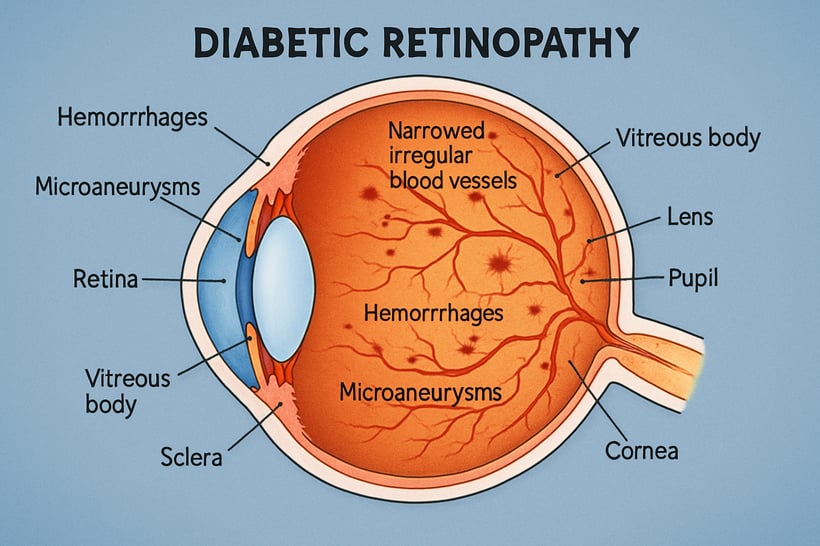
Diabetic Retinopathy
One of the most serious complications of diabetes, this condition occurs when high blood sugar causes damage to the tiny blood vessels in the retina, leading to:
- Leakage of blood or fluid
- Growth of abnormal new vessels (neovascularization)
- Scar tissue and vision distortion
If untreated, diabetic retinopathy can lead to retinal detachment and permanent vision loss. Optometrists use retinal imaging and OCT scans to detect early signs of vision impairment before it affects the patient's vision.
Cataracts
People with diabetes are more likely to develop cataracts at a younger age.
The eye’s lens becomes cloudy, causing blurred vision and glare, especially in bright light or at night.
Mild cataracts can often be managed with updated glasses; more advanced cases may require surgical removal.
Glaucoma
Diabetes increases the risk of glaucoma, a condition where elevated pressure inside the eye damages the optic nerve.
Because glaucoma progresses silently, regular eye exams are critical to prevent irreversible vision loss.
Eye Muscle Paralysis (Diplopia)
Diabetes can affect the nerves that control eye movement, leading to eye misalignment or double vision.
This often resolves as blood sugar levels are stabilized, but should always be evaluated by an optometrist.
Decreased Corneal Sensitivity
High blood sugar can damage the corneal nerves, reducing the eye’s ability to sense irritation or injury.
This makes the eyes more vulnerable to infection and delayed healing — especially in contact lens wearers.
Fluctuating Vision
Short-term changes in blood sugar can cause the eye’s lens to swell or shrink, leading to temporary blurriness or changes in prescription.
If your glasses seem “off” from one day to the next, fluctuating blood sugar may be the cause.
Prevention & Management
- Control blood sugar, blood pressure, and cholesterol through diet, exercise, and medication.
- Don’t smoke — smoking worsens diabetic eye damage.
- Wear sunglasses to protect against UV damage.
- Maintain a balanced diet rich in leafy greens, omega-3s, and antioxidants.
- Visit your optometrist at least once a year for a comprehensive eye exam, even if your vision seems fine.
When to See Your Optometrist
Book an appointment immediately if you experience:
- Sudden vision loss or blurriness
- New floaters, flashes, or dark spots
- Double vision or eye pain
- Difficulty focusing or adjusting to light
Your optometrist can detect early signs of diabetic eye disease and coordinate care with your family physician or ophthalmologist as needed.
Book an Eye Exam - Regular eye exams are the best way to detect diabetes-related vision changes early and prevent sight loss.